Growth strategy
Not Enough Leads? How to Decide What to Fix First
Use a four-step decision tree to find where leads drop off and choose one practical change to test before increasing marketing spend.
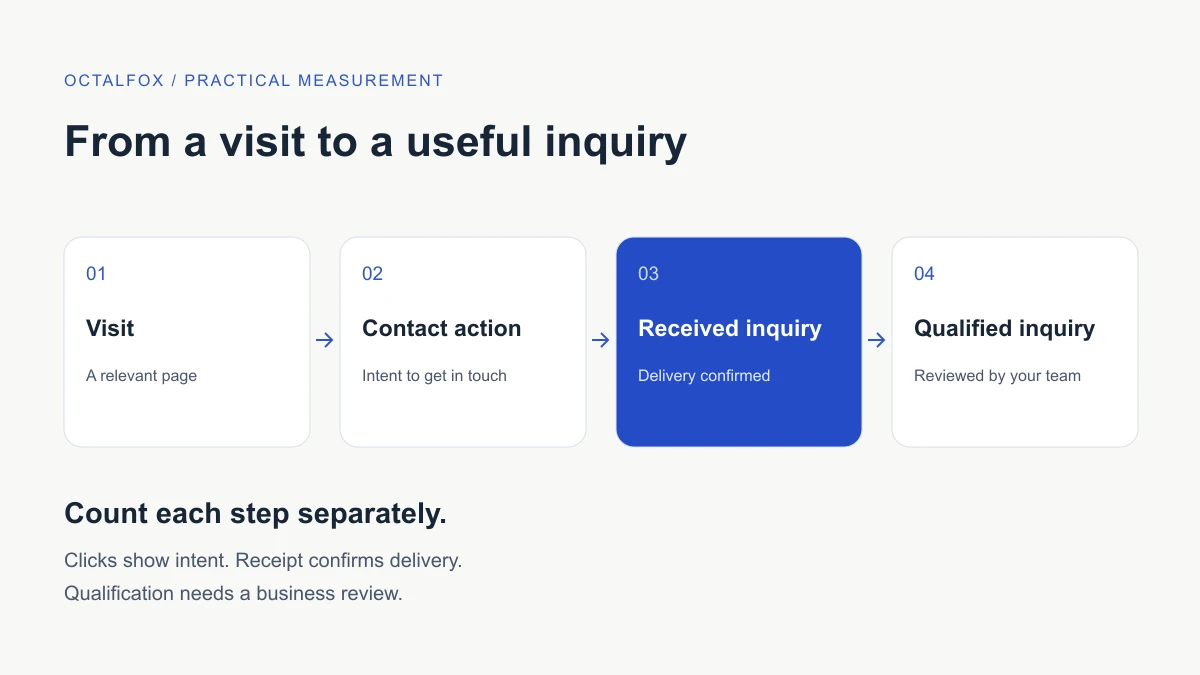
When leads slow down, follow the customer journey from discovery to the next agreed step. Find the first stage where the numbers or recent examples show a meaningful change. That gives you a specific place to investigate before you spend more on campaigns or rebuild a page.
Start with a contact test and a baseline
Test the main inquiry routes on a phone and a computer. Submit an agreed test request and confirm that it reaches the person responsible. Check missed calls, booking notifications and any recent changes to routing. Use the website inquiry measurement guide to reconcile the numbers with actual records.
Compare similar periods, allowing for seasonality and changes in opening hours, campaigns or service availability. If you only receive a handful of inquiries each month, inspect individual examples alongside the totals.
Follow the first branch that matches your evidence
| What you see | What to check | First action to test |
|---|---|---|
| Fewer relevant visitors reach service pages | Search queries, campaign targeting and traffic to the pages that support the service | Pick one important service and fix a specific visibility gap, such as a page that is missing from internal navigation. See digital customer acquisition. |
| Relevant visitors reach the page, but few inquire | Whether the offer, service area and next step are clear on mobile | Fix one observed barrier on the busiest relevant page, such as a contact button that sends visitors to an unrelated page. See traffic without conversions. |
| Inquiries arrive, but few are suitable | Common reasons for poor fit, grouped by source | Clarify the most common mismatch on one page or campaign. Use the lead quality scorecard to measure what changes. |
| Suitable inquiries stall before a conversation or decision | Who owns the inquiry, when they respond and whether a next step is agreed | Give each new inquiry one owner and one due date. Use the inquiry follow-up process to define the handoff. |
If more than one branch applies, fix a broken contact route first so you can trust what you measure. Then choose the stage where a specific change could help the most suitable prospects progress.
Write down a one-change test
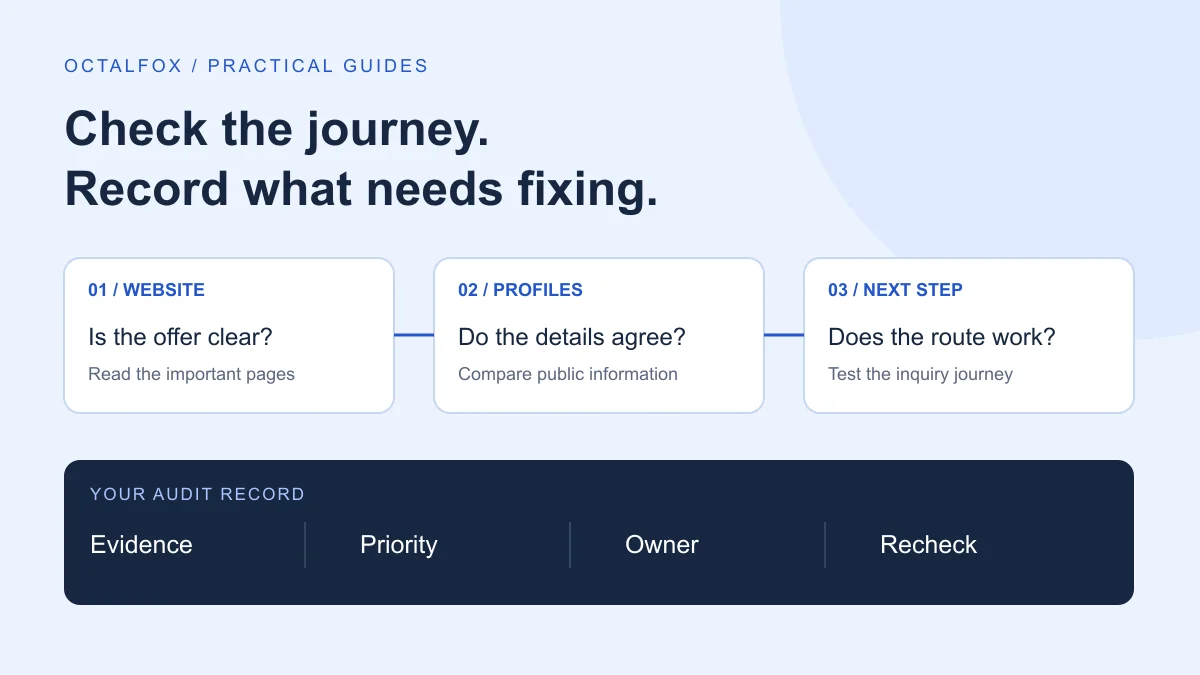
Record the service or audience, the evidence you saw, the change, the owner and the date you will review it. Pick a measure close to the change and keep a customer outcome in view.
For example, a service business sees stable visits and steady inquiries, but many people ask for jobs outside its delivery area. It adds the towns it serves near the contact button. At the next review, it compares the number of suitable inquiries and booked jobs with a similar period. Fewer total inquiries can be acceptable if suitable inquiries hold steady and the team spends less time on requests it cannot fulfill.
If the evidence is mixed, start from the not enough leads challenge and review the affected stage with the people who handle marketing, website inquiries and sales.